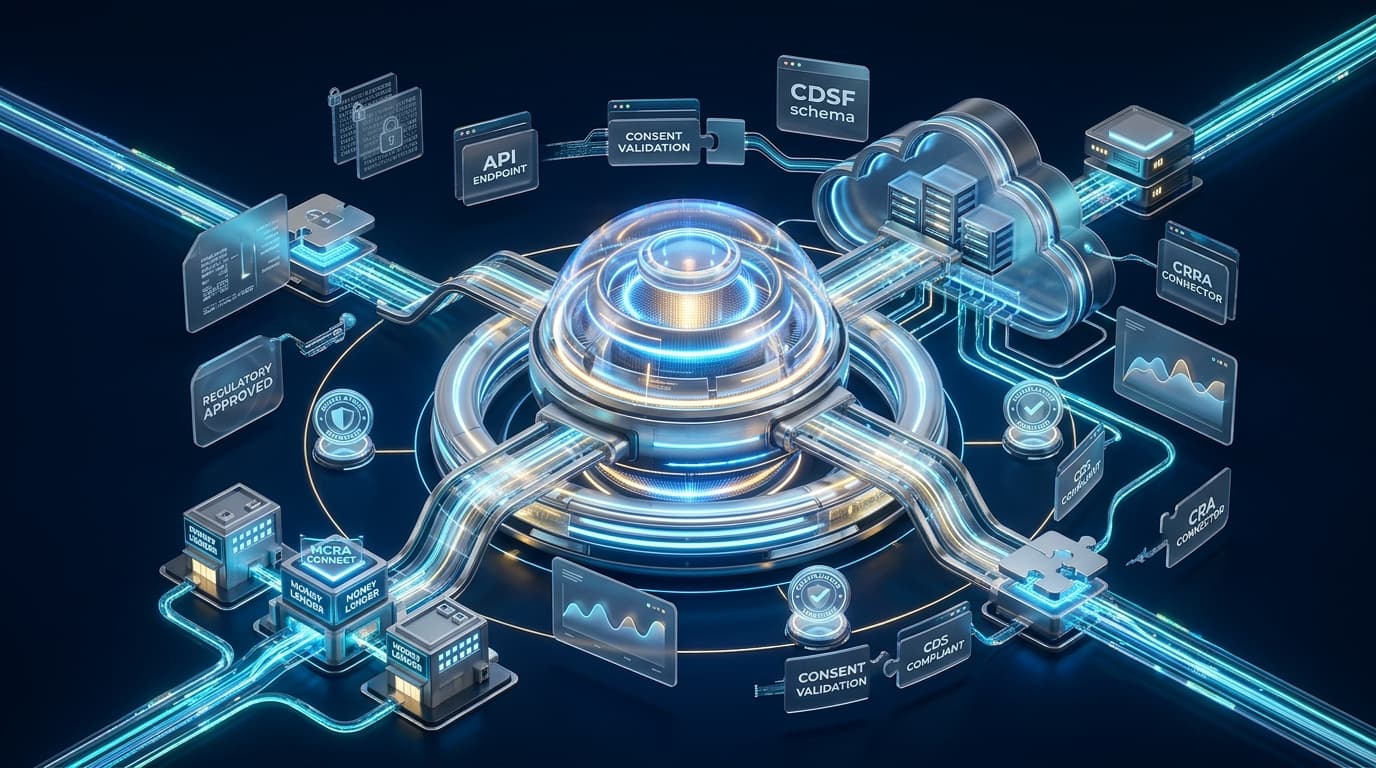
Credit Data Smart (CDS, 信資通)—formerly known as the Multiple Credit Reference Agencies (MCRA) model—officially launched in April 2024 and completed full migration from legacy systems in November 2024.
For Hong Kong banks and licensed money lenders, connecting to CDS is far more than a simple IT connection. It involves a full alignment of operating costs, compliance standards, system upgrades, and risk management models. Below is a breakdown of the 5 most common challenges faced by money lenders and practical strategies to navigate them.
High Integration Costs Burdening SME Lenders
Direct connectivity to CDS entails high upfront system development, secure network channels (such as ICLNet2), Independent Audits (IA), and ongoing platform fees. For small to medium-sized money lenders, total expenses can easily top HK$1 million annually—far beyond their operating budget.
Lenders without dedicated in-house IT teams struggle even further. Industry experts warned that mandatory direct connection could force many smaller lenders out of business over the next two to three years.
Solutions & Recent Improvements:
- TransUnion Money Lender Data Hub: A turn-key solution cutting annual fees down to ~HK$200,000 (approx. 1/10th of direct connection cost) including Independent Audit services.
- HKICL Common Module: Developed by Hong Kong Interbank Clearing Limited, allowing institutions to connect without building a full standalone API.
- Third-Party Integration Gateways: Utilizing plug-and-play middleware (e.g. Cash Direct CDS Integration Gateway) to handle data transformation seamlessly.
Complex Technical Specifications & Limited IT Resources
Connecting requires strict compliance with standardized data formats (e.g., CDSF format), API interfaces, data encryption, corporate governance, and privacy protection protocols. These standards mirror bank-grade security levels.
The application process demands extensive end-to-end testing and compliance reviews, creating severe bottlenecks for traditional lenders operating on legacy loan management systems.
Practical Recommendations:
- Adopt Lightweight Connector Portals: Prioritize HKICL Common Module or CRA-provided lightweight portals to reduce API development burdens.
- Partner with System Integrators (SI): Work with qualified data integration consultants to ensure correct data formatting and avoid audit rejections.
Mandatory Integration Thresholds & Operational Pressures
Regulatory consultation documents suggest that money lenders reaching specific annual unsecured personal loan thresholds (e.g., HK$100 million) must connect to CDS and pull credit reports before loan disbursement.
Even for smaller lenders, regular credit data uploading (e.g., every 30 days) is likely to become a standard money lender license condition. This means data uploading will apply to virtually all lenders regardless of size.
Data Latency Risk
Time lags between data updates can cause discrepancy in risk assessment if borrowers apply for multiple loans within short intervals.
Domestic Helper Loan Scope
Inclusion of foreign domestic helper loan data into CDS is under discussion, further extending compliance coverage.
Actionable Steps:
Lenders should review personal loan volume and establish automated periodic data extraction pipelines early. Adjusting product mix (e.g., increasing secured loans) can also help manage regulatory pressure.
Strict Compliance, Audit, and Data Quality Standards
Participating institutions must comply with personal data privacy (PDPO), corporate governance, and data truthfulness rules. Platform operators audit uploaded data quality continuously.
Furthermore, the exit of Novum Credit from the market highlighted the critical importance of evaluating a Credit Reference Agency's long-term operational stability and data destruction arrangements.
Key Compliance Focus:
Establish internal data governance workflows to ensure uploaded data is accurate, complete, and formatted correctly. Maintain regular dialogue with licensed CRAs (e.g. TransUnion, PingAn OneConnect) for technical updates.
Market Competition and Business Model Transformation
While CDS provides lenders access to comprehensive credit reports for accurate risk assessment, it also increases market transparency—allowing banks and large lenders to leverage data superiority to capture market share.
SME lenders who fail to effectively leverage credit data or suffer under rising compliance costs risk losing market share or being consolidated.
Long-term Strategy:
View CDS integration as an opportunity to upgrade risk control systems and accelerate digital transformation. Leverage credit data to streamline loan approval workflows, lower bad debt ratios, and explore collaborative opportunities with financial partners.
Summary & Action Plan for Money Lenders
Although connecting to Credit Data Smart involves cost and technical barriers, affordable options like Data Hub, HKICL Common Module, and automated middleware are making integration manageable. We recommend a 4-step deployment approach:
Monitor Regulatory Timelines
Track FSTB consultation outcomes, loan threshold rules, and enforcement dates.
Assess Cost-Benefit Options
Compare direct API setup against Data Hub schemes and third-party gateway solutions.
Establish Data Pipelines
Organize customer credit data into compliant formats for 30-day recurring uploads.
Engage Technology Partners
Leverage specialized software vendors to automate data transformations and integration.
Related Articles & Technical Insights
Curated fintech, regulatory guides, and industry insights
Credit Data Smart: 3 Integration Methods – How to Choose (Direct vs Common Module vs Gateway)
Comprehensive architectural comparison of the 3 integration paths for Hong Kong's Credit Data Smart (CDS / MCRA): Direct Connection, Common Module, and Third-Party Gateway. Evaluate costs, IT overhead, and compliance audits.
Key Challenges for Money Lenders in Initial Data Load to Credit Data Smart (CDS / CRP)
Comprehensive analysis of data cleansing, schema mapping, snapshot cut-off windows, and privacy compliance hurdles during Initial Data Load to Credit Data Smart.
New 'Data Hub' Solution Accelerates 'Credit Data Smart' Integration for Moneylenders
TransUnion's cost-effective Data Hub platform designed for HK money lenders to simplify Credit Data Smart connectivity.